As European Companies Defy the Odds, Here’s How Intelligent AI-Powered Advertising Can Help Continue This Momentum Into 2026
The move toward agentic AI and autonomous agents isn’t just another upgrade; it’s a leap from cruise control to self-driving.
edited by Jason Fell
|
Jan 06, 2026
ArtemisDiana | Getty Images
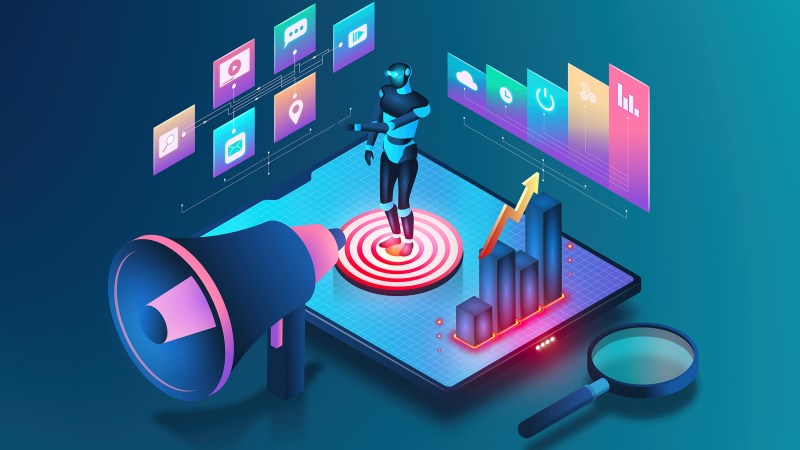
Marketing Automation Tools - Marketing Automation Software - Marketing Technology - MarTech - Conceptual 3D Illustration
Written by Thomas Duggan, Product Marketing Manager at ADvendio
The rapid rise of artificial intelligence (AI) often revolves around the potential downsides of the technology. Yet, rather than stripping the bottom out of the market, AI is helping to underpin growth in Europe against the backdrop of one of its hardest global economic outlooks.
Despite global market fluctuations, European companies have been outperforming expectations.
For instance, according to Reuters, Eurozone business activity had defied the odds and shown incredible economic resilience, with the service sector alone expanding at the quickest pace that we’ve seen for over a year and a half.
To keep the momentum going, these enterprises are going to need to reach new customers, making advertising and marketing mission-critical. In turn, we’ve seen an uptick in the sector as leaders keep allocating budget to these areas. The European digital advertising market grew by 16%, reaching €118.9 billion. This represents the highest annual revenue recorded and strongest growth for the sector since 2011.
Now, AI has entered the picture, helping companies achieve even greater results with this advertising spend. IAB Europe, the European-level association for the digital marketing and advertising ecosystem, released a survey in September 2025 that 85% of companies already use AI-based tools for marketing, and three-quarters have at least one campaign function now powered by AI.
Further, the adoption of AI wasn’t a cost-cutting exercise. No respondents to the survey planned to reduce their spending on marketing and advertising due to AI, with the majority actually planning to increase investment into this area of operations.
That’s because the industry is shifting from a reactive discipline to a sharper, data-driven growth engine. And now a new wave of AI tools is raising the bar again. The move toward agentic AI and autonomous agents isn’t just another upgrade; it’s a leap from cruise control to self-driving. A necessary step for any European business that plans to stay on track in this global AI race.
How AI evolved from task automation to strategic storyteller
A few years back, AI in advertising was basically a very helpful office intern. While it couldn’t bring your coffee order, it sorted spreadsheets, tidied dashboards, and picked up the repetitive, often mundane tasks. Many tools continue to offer the same processes, but AI has come a long way since simply elevating efficiency in the form of automation.
In just a few years, it’s been promoted, behaving like a teammate with instincts of its own. Setting goals, making decisions, executing actions and evaluating itself. The explosion of cloud and infrastructure maturity gave models the ability to process everything from images to structured data. From live performance metrics to behavioural signals.
Agentic AI can now take the flood of data that has long overwhelmed the advertising world and turn it into a narrative. Not just numbers on a dashboard, but a story with direction, context and consequences. In an industry drowning in metrics, the ability to convert raw data into a meaningful story is becoming a new kind of currency.
Here, IDC Europe recognizes that “for B2B marketing, storytelling helps deliver narratives that take buyers on a journey of understanding that uncovers insights they may not yet had exposure to. Without directly advertising or selling, storytelling can present an alternative view of the challenges businesses face in the industries in which they compete.”
And when it comes to consumers, storytelling is equally powerful. Levi & Strauss reported record-breaking sales figures in Europe in Q2 of 2025, with the Direct-to-Consumer (DTC) segment alone growing by a significant 9% with storytelling across DTC channels a key part of this.
Mathilde Vaucheret, VP of Marketing, Levi’s Europe, explained that they are “focusing on market-specific strategies and curated storytelling, expanding our reach and connecting directly with our fans in Europe.”
With this form of AI-powered automation, it’s also possible to experiment at scale to find the best-fit ad strategy at a granular level for specific countries, product features or price points. This means that AI not only increases operational efficiency but also means that European enterprises can get much more value for money with their ad spend.
The agentic AI shift that separates fast movers from fast followers
According to a SAS study on Agentic AI, there remains hesitation, with marketers sorting themselves into three groups: the ones watching, the ones preparing, and the ones already driving change.
Adopters aren´t just experimenting; they’re rolling agentic systems out at scale. Sixty-three percent already have enterprise-wide AI strategies in motion, compared with just 25% of Observers. And while most teams are still dipping a toe in, adopters are using AI across entire campaign lines, making real-time decisions at a rate (43%) that observers barely touch.
Now, adopters are leveraging capabilities needed to handle everything from ad bidding and budget allocation to creative testing and campaign scheduling. What’s more, once tasks have been allocated, the AI can use its given parameters to handle these tasks independently. This level of hyperautomation on campaigns promises to free up a significant amount of time that advertising executives can use to focus on high-level strategy, creativity, and brand storytelling.
By absorbing the operation intensity, they free teams to think bigger. Shaping brand strategy, experimenting with new markets, and anchoring the campaign in long-term growth.
In an environment where economic resilience is becoming Europe’s defining narrative, the ability to make thousands of small, intelligent course corrections automatically has become one of the strongest competitive differentiators available.
The rise of agentic AI in digital channels opens the doors to predictive analytics and real-time optimization
Today, 67.2% of all advertising spend in Europe is now digital. This is thanks in large part to the dominance of digital channels that have largely replaced traditional ways that advertising campaigns were served to consumers, such as print media and billboards.
For the latter, it seems even here digital is replacing traditional billboards with dynamic digital screens and boards in public spaces. In 2024, LED display advertising was responsible for a 24.5% growth of the European advertising market, showing how much value is tied up in this channel. Smart TVs also mean that Subscription Video on Demand and Broadcast Video on Demand offer significant advertising opportunities.
What this means is that we’ve never had more advertising data at our fingertips nor more opportunity to optimize campaigns in real-time. While we’ve seen predictive analytics provide data insight in the form of dashboards, users were still tasked with executing actions based on that information. But most teams never had the chance to act on those insights at the speed digital channels move.
Agentic AI now leverages those predictions and carries out the next step, able to analyze campaign outcomes, identify emerging trends, and predict customer behavior before it happens. Not with full autonomously, but with guidance from a professional that monitor that the right steps are being taken.
This allows advertisers to personalize campaigns not just through personalization based on audience demographics and preferences but also to account for these external forces that dictate whether a campaign will resonate or fall flat. In turn, this also means that the value of campaigns can be optimized, allowing changes to be made in response to real-time data being received from the broad range of digital channels to offer ROI in a way that’s unprecedented for the industry.
Future-proof growth at scale with intelligent AI
AI promises to be an incredibly powerful tool within the advertising industry due to the widespread digitization of the industry and the channels used to connect with audiences.
This means that we have an unprecedented level of access to performance data that underpins hyperpersonalized ads and even predictive campaigns. Meanwhile, the power of intelligent automation frees up time so that advertising executives can focus on creative storytelling.
For European enterprises, AI is the secret to future-proofing company growth in 2026.
Written by Thomas Duggan, Product Marketing Manager at ADvendio
The rapid rise of artificial intelligence (AI) often revolves around the potential downsides of the technology. Yet, rather than stripping the bottom out of the market, AI is helping to underpin growth in Europe against the backdrop of one of its hardest global economic outlooks.
Despite global market fluctuations, European companies have been outperforming expectations.